
In my previous post on canning food, I mention that one of my favorite ways to preserve food I grow, cook, pick or gather is by canning. I learned the art of canning food from my great-grandmother and my mother. I’ve taught my kids how to can. Some might say it is old-fashioned and a huge time suck. They’d be right about both, but canning is also something we shouldn’t forget. We take for granted now how easily it is to go to a store and buy what we need and put it in our pantry or refrigerator. What happens when groceries become so expensive it’s out of budget range? What happens if the power goes out? What happens if there’s an apocalypse? Ok, that last one is just my fiction books slipping in, but my point is there is never a time when anyone who cans will say, “I wish I hadn’t done that”. The opposite is true. There’s nothing like eating homemade relish, salsa, apple butter, apple pie filling or even soup from a glass jar.
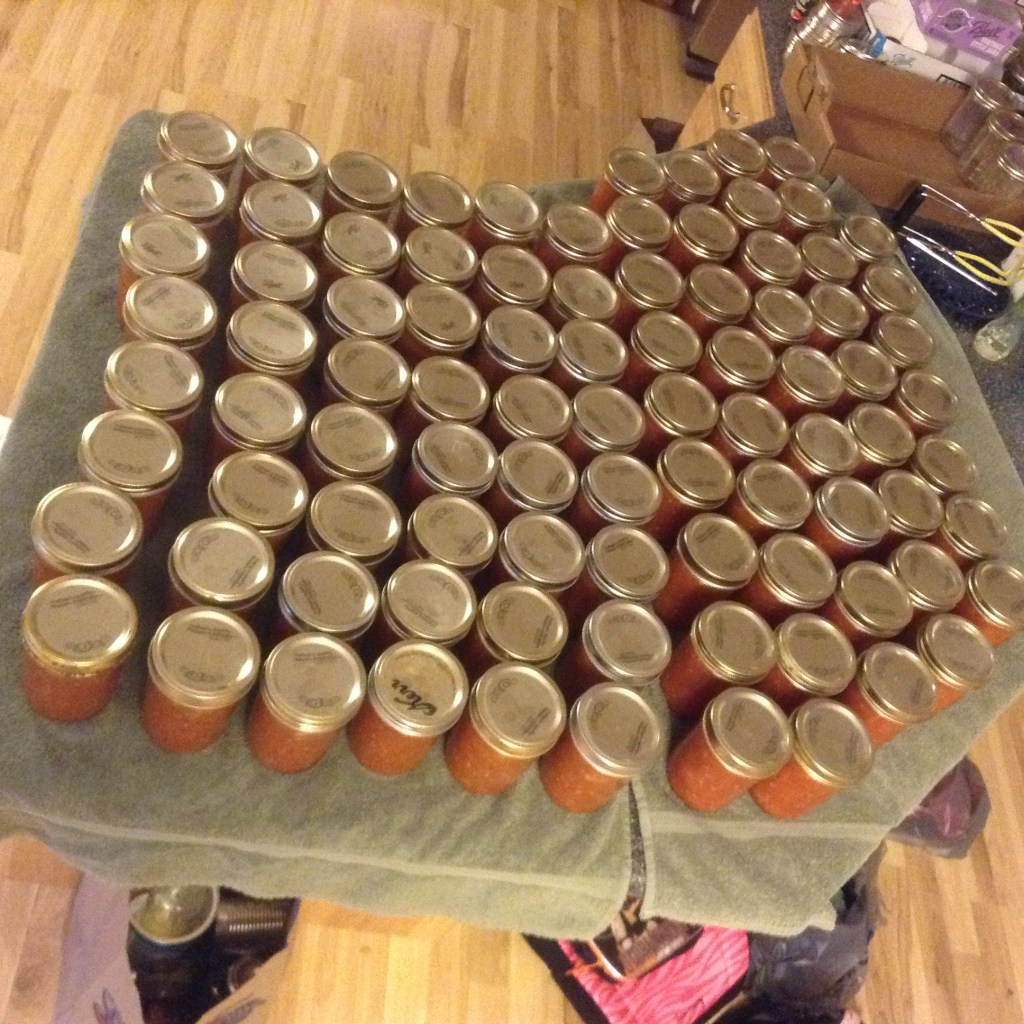
What is canning? It is the preservation of food typically in glass jars by removing the oxygen through a combination of heat, cold and/or pressure. With no O2, no bacteria or other microbes can get in or grow and the food will not spoil. Canned good you buy at the store are essentially the same thing in metal cans.
Why can? Besides an apocalypse cache, canned foods are rich in nutrients being preserved fresher. Almost anything can be canned. Did you know even milk can be canned or water? Also, canned foods lasts a really long time. Even longer than canned goods in a store. Finally, in the long run canning your own food can save you money. Especially if you grow the food yourself. A packet of seeds, jars, lids, rims, and the tools for the method you choose is all you need.
Methods
| Methods | Pros | Cons |
| Water Bath | Easier, less expensive startup cost | Not as safe for canning certain things such as meats |
| -Cold Packing | Faster | Only recommended for specific foods, doesn’t always seal properly |
| -Hot Packing | Most consistent results. Can be done with many different foods | More time consuming, risk of burns higher. Jars can break if proper equipments isn’t used |
| Pressure Canning | Safest method of canning for eliminating bacteria and other microbes | A lot of fear around pressure canning equipment malfunctiong and getting hurt |
| Dishwasher Canning | Supposedly easy | Variables and safety unknown such as reaching proper heat, pressure or time. Not recommended |
Whatever method you choose, canning is easier than you think. Put in the simplest form here are directions for each method.
- Hot Water Bath Canning
- Food item is heated (If recipe requires syrup, this is also heated)
- Jars are cleaned and heated (I do this in the dishwasher or hot water in the sink)
- Lids are heated in boiling water
- Place food into jar with some space left at the top (1/2″ – 1″)
- Wipe lid edge clean with dry towel (do not skip this step!)
- Place hot lid onto clean and dry jar top
- Place screw band on top and screw tight (don’t overtighten)
- Fill all spaces in a hot water bath canner to balnce it
- Lower jars into boiling water (some recipes say to not cover lids completely in water, most require you to)
- Boil for specific time (typically 15-20 minutes)
- Remove from water and let rest for 24 hours
- Listen for “pings” which means lids are sealing (it’s a good noise!)
- Gently check each lid to ensure dimple is down (don’t press them down this is a false seal)
- Label lid and store (can remove screw band, I do not)
- Do not store jars on top of other jars
- Cold Water Bath Canning
- The directions are identical except the food ingredients are raw (uncooked)
- Typically done with certain fruits and vegetables
- The water, brine, fruit juice or syrup is added to jars (most often these are heated with some exceptions)
- The rest of the directions are the same as hot water bath canning
- Pressure Canning
- Directions are identical to hot water bath canning except jars are put into a pressure canner with around 2-3″ water (varies based on model)
- Follow the directions for your pressure canner exaclty
- Never force vent!
- Allow the canner to cool, release presure and vent completely
- Remove from water and let rest for 24 hours
- Listen for “pings” which means lids are sealing (it’s a good noise!)
- Gently check each lid to ensure dimple is down (don’t press them down this is a false seal)
- Label lid and store (can remove screw band, I do not)
- Do not store jars on top of other jars
- Dishwasher Canning
- This method is not recommended for canning as there are unknown variables in temperature, pressure or time
- Boiling in a plain pot is preferable however this can also cause jars to break
- A canner or pressure canner is highly recommended for safety and favorable results
That’s all there is to it. There are tons of resources out there for canning. My favorite recipe book is the Ball Blue Book of Canning. There are newer updated versions that are even better now.
If you would like a video tutorial, I demonstrate hot water bath canning on my YouTube channel. Find that here.
Thank you so much for reading. Let’s see what we learn next week!
I love this. The irony of learning, I feel, is that the more we learn, the less we really know.…

 The Sides to a Story
Leave a comment